Sampling in 2025: Legal, Creative, and Technical Guide
# Sampling in 2025: Legal, Creative, and Technical Guide
Sampling is the foundation of hip hop culture. From the earliest breakbeat loops to modern chop-and-flip techniques, the art of repurposing existing recordings into new music remains one of the most creative production approaches. But in 2025, the legal and technical landscape has evolved significantly.
The Legal Reality
Let us address the elephant in the room. Sampling without clearance is copyright infringement. Period. However, the practical reality varies:
When You Must Clear
- Any commercial release on streaming platforms
- Music submitted to labels or publishers
- Beats sold to artists who will distribute commercially
- Sync placements in film, TV, or advertising
- Any situation where money is exchanged
The Clearance Process
Clearing a sample requires permission from two parties:
- Master recording owner (usually the label that released the original)
- Publishing/composition owner (the songwriter or their publisher)
Both must agree. Fees range from a few hundred dollars for obscure recordings to hundreds of thousands for well-known songs. Some require royalty splits instead of or in addition to upfront fees.
Alternatives to Traditional Sampling
Royalty-Free Sample Packs Companies like Splice, Tracklib, and Loopcloud offer pre-cleared samples:
- Splice: Massive library, one-shot and loop samples, cleared for commercial use
- Tracklib: Actual vinyl recordings licensed specifically for sampling
- Loopcloud: Loop-based samples with commercial licenses included
Replay/Interpolation Instead of using the original recording, replay the sampled part yourself or hire a musician. This only requires publishing clearance (not master clearance), which is typically cheaper and easier to obtain.
AI-Assisted Sample Creation New tools can generate sounds inspired by genres and eras without using actual copyrighted material. While the legal landscape around AI-generated music is still evolving, these tools offer another path to vintage-sounding material.
Creative Sampling Techniques
Chopping The fundamental hip hop sampling technique:
- Import a sample into your DAW or sampler
- Identify the best sections (melodically and rhythmically interesting)
- Cut into individual chops (as small as single hits or as large as full bars)
- Rearrange the chops to create a new melody or progression
- The more you rearrange, the more original the result
Pitching and Time-Stretching - Pitch the sample down for darker, slowed vibes - Pitch up for chipmunk soul (Kanye West era technique) - Time-stretch to fit your tempo without changing pitch - Combine pitching and stretching for extreme transformation
Layering - Stack multiple samples from different sources - Use one sample for harmony, another for texture - Layer sampled elements with original synthesizer parts - Create density through multiple complementary sources
Reversing - Reverse entire phrases for eerie atmospheric effects - Reverse individual chops and rearrange - Use reversed elements as transitions and builds - Reverse the reverb tail of a sample for swells
Technical Workflow for Sampling
Finding Samples
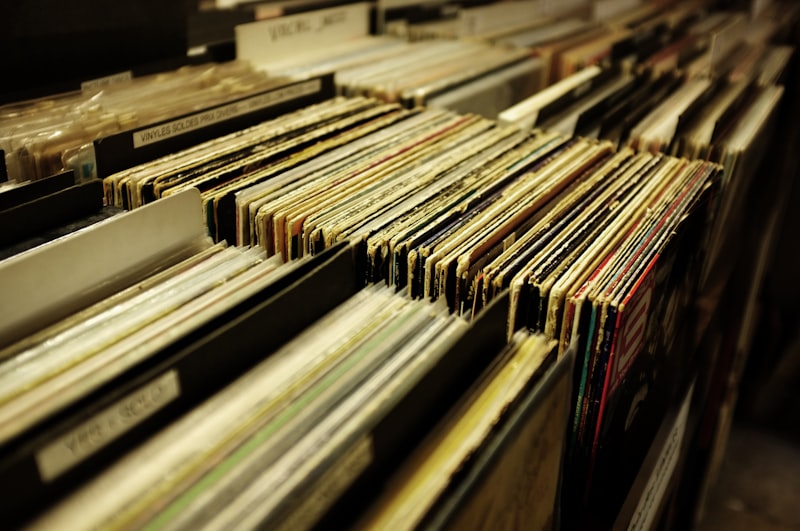
- Vinyl record stores (digging for obscure records)
- YouTube and streaming services (for discovery, then buy the record)
- Sample pack libraries (Splice, Tracklib, Loopcloud)
- Thrift stores and garage sales (hidden gems in dollar bins)
- Your own recordings and previously unused sessions
Recording from Vinyl
If you dig vinyl, record at the highest quality possible:
- Use a quality turntable with a good stylus
- Route through a phono preamp into your audio interface
- Record at 24-bit, 44.1 or 48 kHz minimum
- Record in a quiet environment to minimize noise floor
- Clean records before recording to reduce crackle (unless you want it)
Processing After Sampling
Once your sample is captured:
- EQ to remove unwanted frequency content
- Filter to create mood (low-pass for warmth, high-pass for airiness)
- Add compression to control dynamics
- Apply saturation for warmth and character
- Use noise reduction if needed (carefully to preserve character)
Building a Sample-Based Beat: Step by Step
- Listen through your source material and identify interesting sections
- Record or import the section into your DAW
- Adjust tempo and pitch to your desired setting
- Chop the sample into individual pieces
- Arrange chops to create your new progression
- Program drums that complement the sample's rhythm
- Add bass that follows the sample's harmonic content
- Layer additional elements (synths, effects, vocal chops)
- Mix and blend everything into a cohesive whole
Ethical Considerations
Beyond legality, consider ethics:
- Give credit to your sample sources when possible
- Do not claim fully sampled productions as entirely original
- Support the original artists by purchasing their music
- Understand sampling as a tradition of respect and recontextualization
- Add enough of your own creativity to make it truly new
The Future of Sampling
Sampling technology continues evolving. AI stem separation tools like LALAL.ai and RipX can isolate individual instruments from mixed recordings. This opens creative possibilities but also raises new legal questions. Stay informed as the legal framework catches up with the technology.
Sample Culture is Hip Hop Culture
Sampling is not theft when done with creativity, respect, and legal compliance. It is a conversation across time, connecting musical traditions and creating something new from the past. Embrace sampling as both an art form and a craft, and always push yourself to transform your sources into something uniquely yours.