Mixing Low End: Getting Your 808s and Bass Right
# Mixing Low End: Getting Your 808s and Bass Right
The low end is simultaneously the most important and most difficult frequency range to get right in hip hop production. A powerful, clean low end separates professional beats from amateur ones. Here is how to achieve that chest-rattling bass without muddying your mix.
Understanding the Low Frequency Spectrum
The low end is not one monolithic range. It contains distinct zones that serve different purposes:
- Sub bass (20-60 Hz): Felt more than heard, provides physical impact
- Bass (60-150 Hz): The body and warmth of your low end
- Low mids (150-300 Hz): Fullness that can quickly become mud
Most problems occur when these zones overlap or compete. Your 808 might be dominating the sub zone but lacking in the bass zone, making it disappear on small speakers.
The Kick and 808 Relationship
In trap production, the 808 serves dual duty as both kick and bass. Getting this right is crucial:
Option 1: 808 Only Use a long 808 that has both a punchy transient and a sustained tail. The initial click provides the kick sensation while the body carries the bass note. This works well for minimal beats.
Option 2: Kick Plus 808 Layer a short kick for the transient attack with a longer 808 for sustain. The kick handles 60-100 Hz punch while the 808 carries below 60 Hz. Use sidechain compression or volume shaping to duck the 808 when the kick hits, preventing phase cancellation.
Mono Below 100 Hz
This is a non-negotiable mixing rule. Everything below 100 Hz should be in mono. Bass frequencies that are out of phase between left and right will cancel each other out on mono playback systems (most club systems and many Bluetooth speakers). Use a utility plugin to mono your low end or simply keep bass elements panned center.
EQ Techniques for Clean Low End
High-Pass Everything Else The single most effective technique for clean low end is high-passing every element that does not need bass frequencies. Your melodies, pads, vocal chops, and effects should all have a high-pass filter removing everything below 100-200 Hz. This frees up space for your 808 to breathe.
Surgical Cuts If your 808 is masking your kick or vice versa, find the specific frequency where they clash. Usually this is around 60-80 Hz. Cut 2-3 dB from one element at that frequency and boost the other slightly. This carves separate pockets for each.
Shelving for Shape A low shelf boost around 40-50 Hz adds sub weight without affecting the upper bass range. A low shelf cut around 200-300 Hz reduces muddiness while keeping the deep bass intact.
Compression for Controlled Bass
Bass compression requires different settings than other elements:
- Attack: Medium to slow (let the transient punch through)
- Release: Matched to the tempo (so the compressor breathes with the groove)
- Ratio: 3:1 to 6:1 (enough to control without squashing)
- Threshold: Set for 3-6 dB gain reduction on peaks
Avoid fast attack times on bass as they will remove the initial punch that makes 808s hit hard.
Saturation and Harmonics
Small speakers cannot reproduce frequencies below 60-80 Hz. To make your bass audible on earbuds and laptop speakers, add upper harmonics through saturation. These harmonics sit in the 100-300 Hz range where small speakers can reproduce them, creating the psychoacoustic illusion of deep bass.
Apply gentle saturation or distortion to a parallel copy of your 808. Blend in just enough to add harmonics without changing the clean sub character. Many producers use plugins like Decapitator, Saturn, or even a simple waveshaper.
Sidechain Compression
Sidechaining your bass to your kick creates space for both elements to coexist:
- Route your kick to the sidechain input of your bass compressor
- Set fast attack (0.1-1 ms) so the bass ducks immediately
- Set release to match the kick decay (50-100 ms typically)
- Aim for 3-6 dB of gain reduction
This creates a pumping effect that gives the kick room to punch while the bass fills in immediately after.
Reference on Multiple Systems
Your studio monitors might have excellent bass response, but your listeners are on earbuds, car stereos, and phone speakers. Always check your low end on:
- Studio monitors (your primary mixing reference)
- Headphones (reveals details and balance)
- Car stereo (bass-heavy playback test)
- Phone speaker (worst-case scenario check)
- Bluetooth speaker (common consumer playback)
If your bass translates across all these systems, you have nailed it.
Tuning Your 808s
An out-of-tune 808 will clash with your chord progression and create dissonance in the low end. Always tune your 808 samples to match the key of your beat. Most DAWs have a tuner plugin, or you can use a spectrum analyzer to verify the fundamental frequency matches the intended note.
Common Low End Problems and Solutions
- Muddy mix: High-pass non-bass elements more aggressively
- Bass disappears on small speakers: Add saturation for harmonics
- Kick and 808 clash: Sidechain or separate their frequency ranges
- Bass sounds boomy: Cut around 200-300 Hz, check room acoustics
- Inconsistent bass level: Use more compression or limit the bass bus
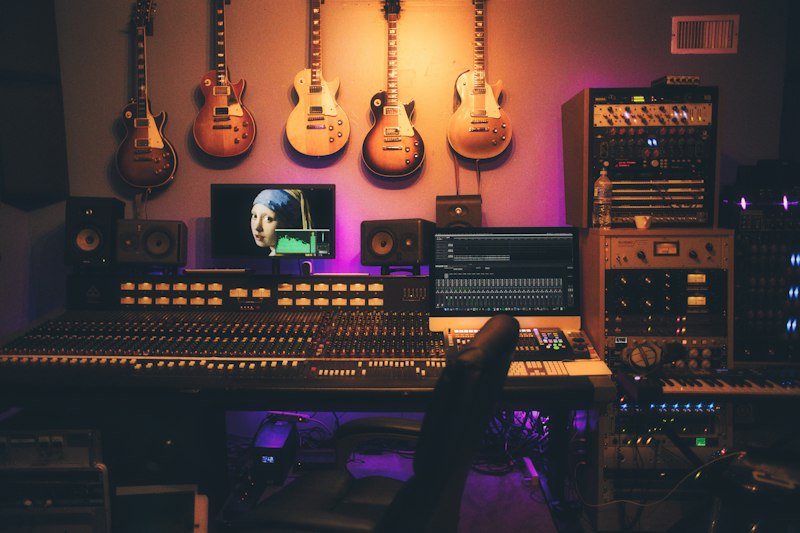
Getting the low end right takes practice and good monitoring. Invest in acoustic treatment for your room, use multiple reference points, and train your ears to identify the difference between clean, powerful bass and muddy, undefined low end.